Project 05 — 2026
— INDEPENDENT BUILD
Two converting funnels, built end-to-end on two platforms
GoHighLevel & Framer — Independent Build, Not a Client Engagement
Both funnels below are independent builds — full copy, wireframe, design, and build, completed by me on two different platforms.
— THE CHALLENGE
Most of my case studies show a single deliverable — a page, a set of creatives, one build. These two needed to do more: full funnels, built end-to-end, moving a visitor from first impression through a structured, tiered offer.
— WHAT I DID
I built two complete funnels — copy, wireframes, design, and build — one in GoHighLevel and one in Framer. Each moves a visitor from the first section to a clear, tiered offer, with every step designed to earn the next.
A converting funnel does the same job no matter what it's built on — move someone from curious to committed without losing them at any step along the way.
— THE APPROACH
Building the funnel before designing a single page
Both builds started with the path a visitor would take, not with a layout. The design followed the structure, not the other way around.
Funnel Mapping
Planned the full path from first visit to a committed lead for both builds before any design work began.
Offer Structure
Packaged each offer into clear tiers, giving the funnel a defined next step at every stage.
Copywriting
Wrote every section to move a visitor toward the next step, not just describe the offer.
Wireframing
Wireframed both funnels to lock the structure before any visual design.
Design
Designed each funnel end-to-end, adapting the same conversion structure to each platform's strengths.
Build
Built and connected both funnels — GoHighLevel for System One, Framer for System Two.
Status
Both builds are complete and reviewed, currently pending a domain purchase before going live.
Research
Reviewed drop-off points with the front-desk team.
Strategy
Reframed the flow around symptoms, not internal terms.
Architecture
Mapped a path with one decision visible at a time.
Wireframes
Tested the new flow before visual design.
Design
Applied the visual system throughout the experience.
Development
Built the experience inside the client's platform.
Automation
Connected reminders and follow-ups to reduce no-shows.
Launch
Delivered documentation and post-launch support.
— WHY THIS MATTERED
A funnel is a sequence, not a page
A converting funnel isn't one well-designed page — it's positioning, offer structure, and a clear next step, all working together across multiple stages. Building two complete funnels end-to-end, on two different platforms, shows that structure holds up regardless of the tool behind it.
Every step earns the next one.
NOTES FROM THE STUDIO
— GALLERY
A closer look at both funnels
Two complete funnels, built on two different platforms, using the same underlying structure.
— SYSTEM ONE — GOHIGHLEVEL
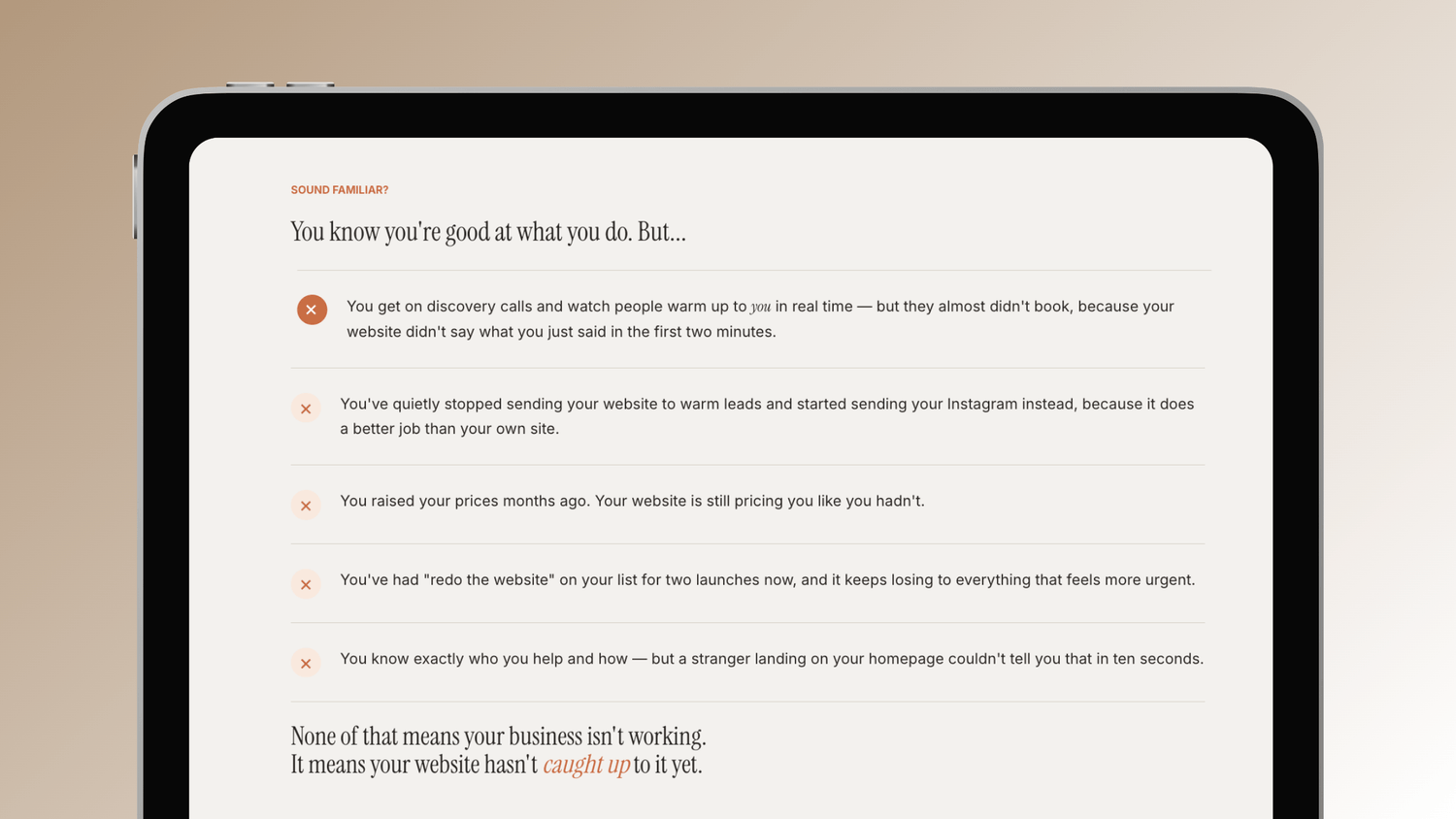
The funnel opens by naming a specific, recognizable problem before any offer appears — the first step in moving a visitor toward the next stage.
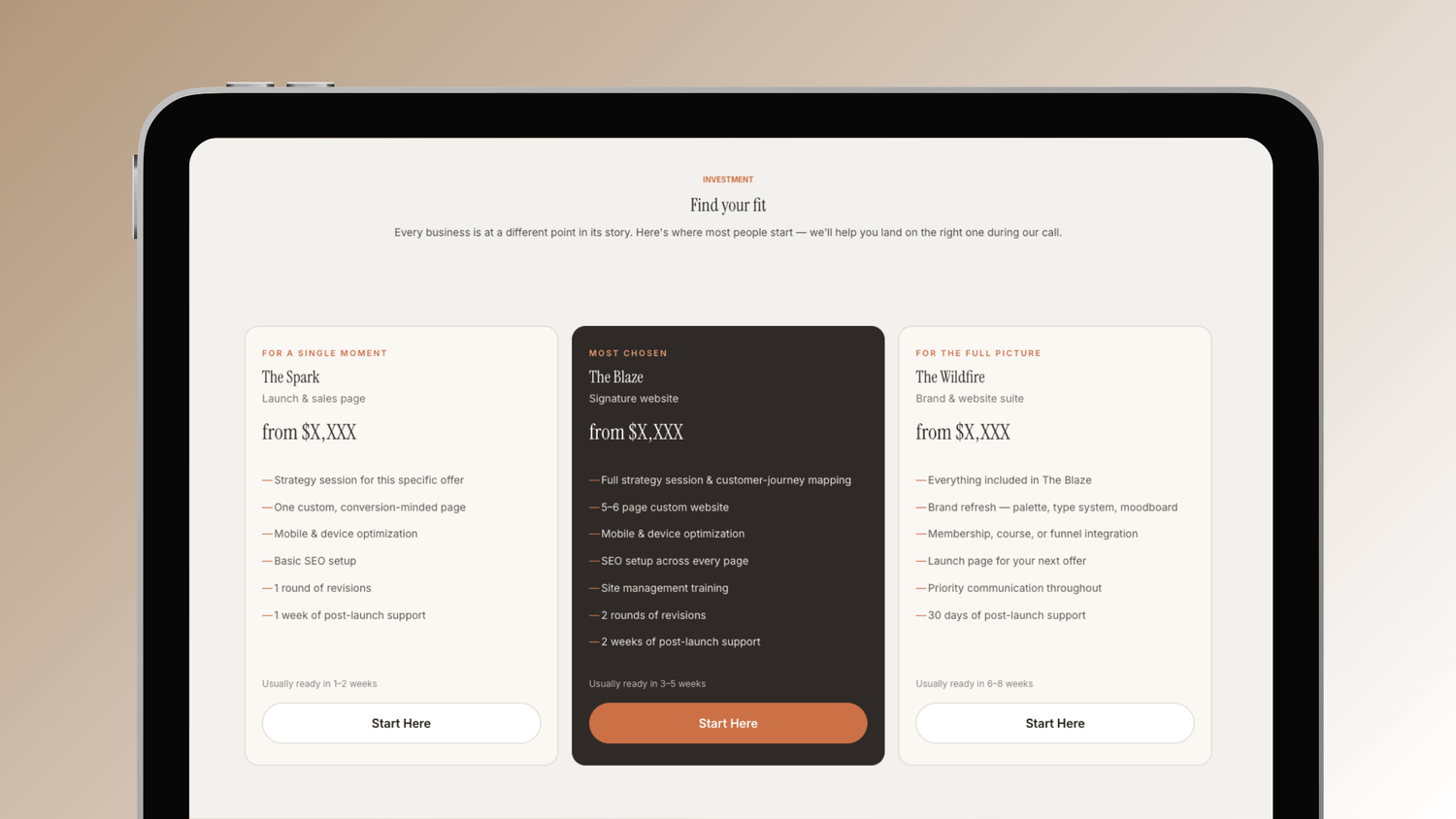
TheThree tiers give the funnel a defined decision point, each spelling out exactly what's included and what happens next.
— SYSTEM TWO — FRAMER
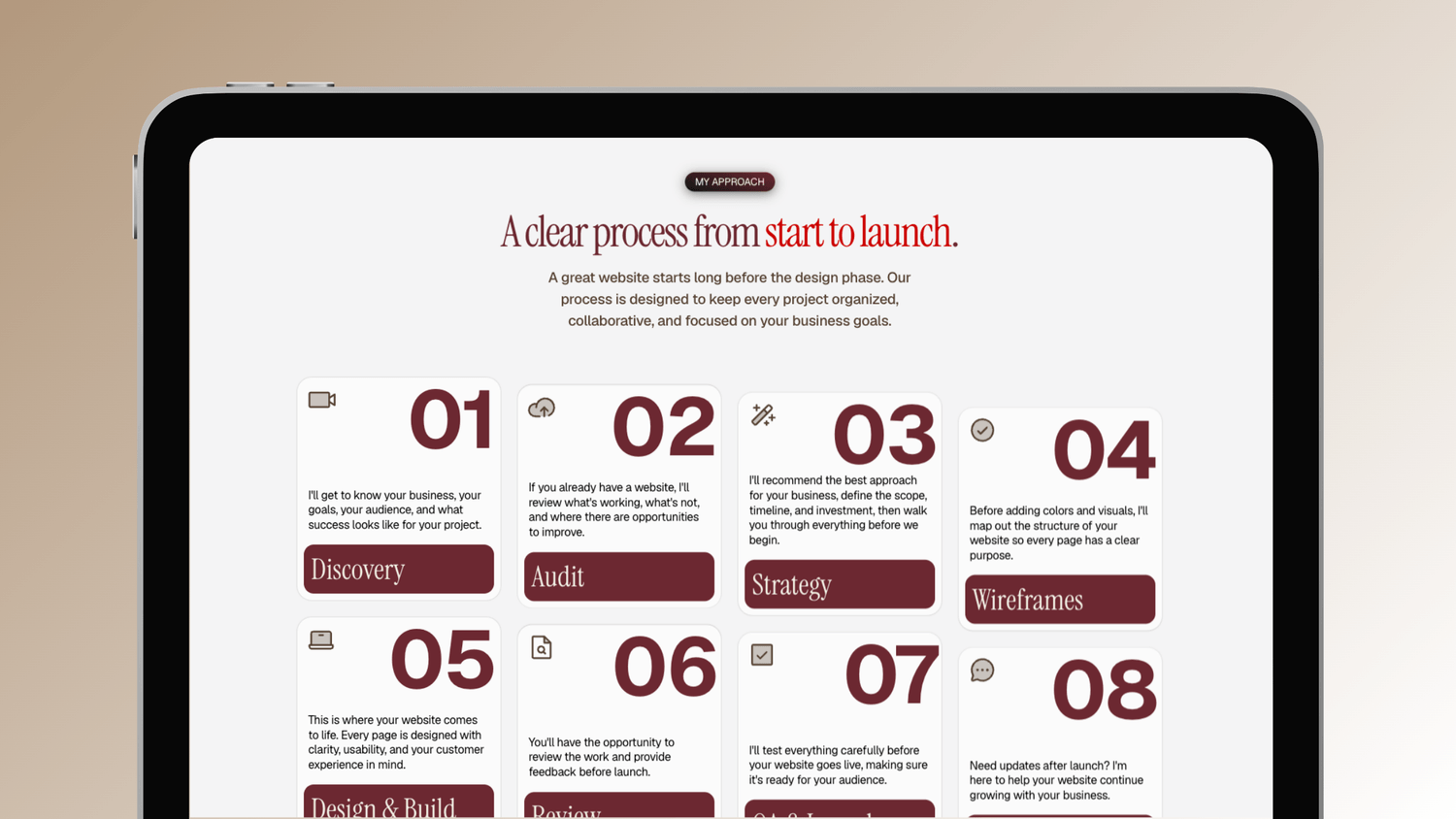
An 8-stage process is laid out visibly, giving a visitor a clear picture of what happens immediately after they convert.
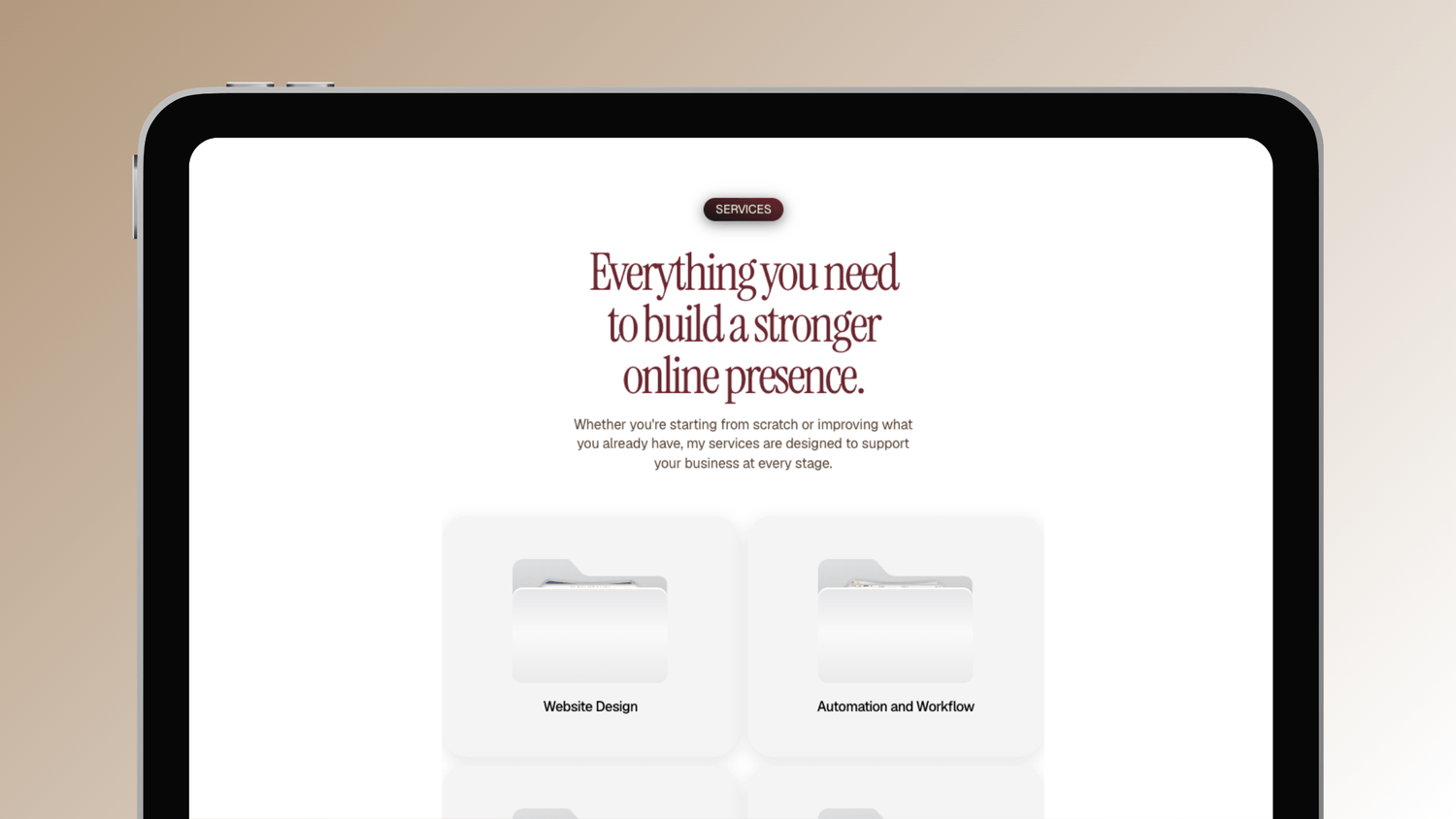
A broader services grid extends the same funnel structure to a wider audience than System One's narrower niche.
— REFLECTION
What I'd carry into the next project
WHAT I LEARNED
Building a funnel end-to-end — copy, wireframe, design, and build — makes it obvious where a visitor could drop off, in a way that designing a single page doesn't.
WHY THESE DECISIONS
Building the same funnel structure on two platforms was deliberate, so what's being shown is the conversion strategy, not familiarity with one tool.
IF I IMPROVED IT FURTHER
Once live, I'd want real visitor data to see where each funnel actually loses people — the one thing an independent build can't fully simulate.
— MORE CASE STUDIES
Other projects worth a look.


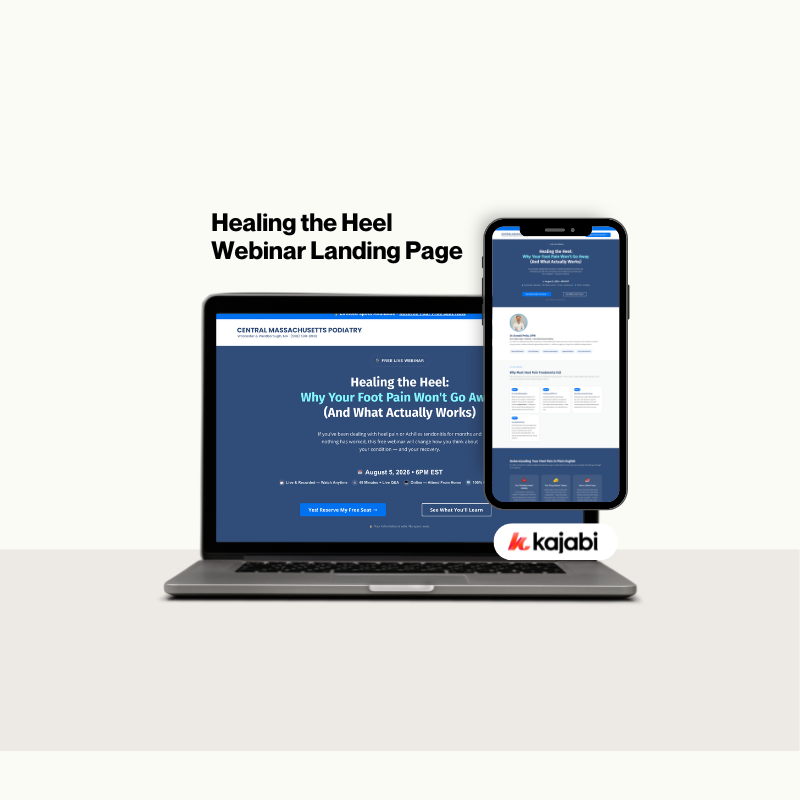
A webinar funnel designed to educate patients and increase appointment bookings.
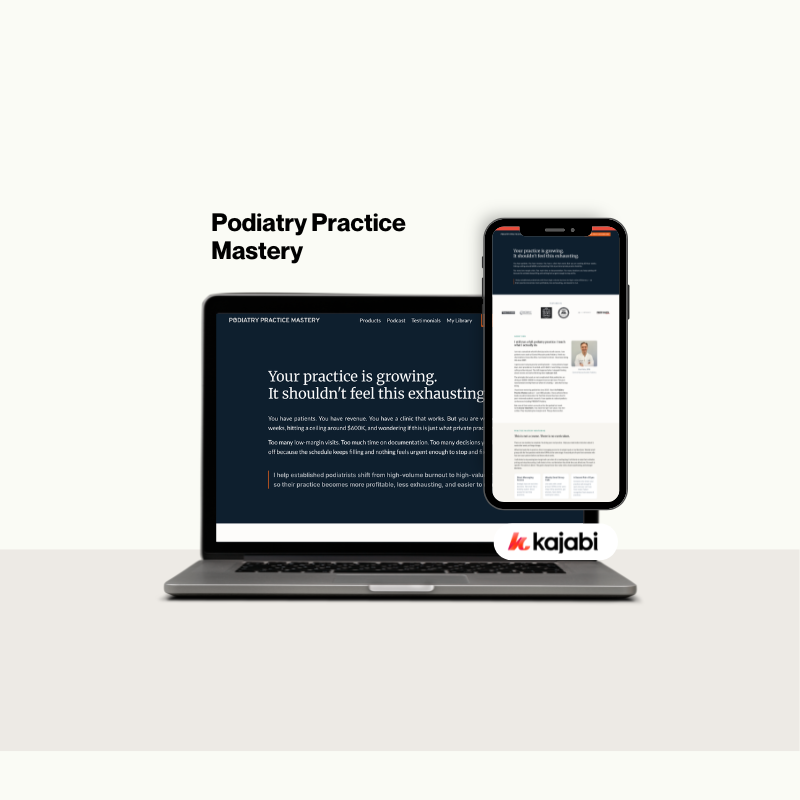
A membership website built to help podiatrists grow profitable and sustainable practices.
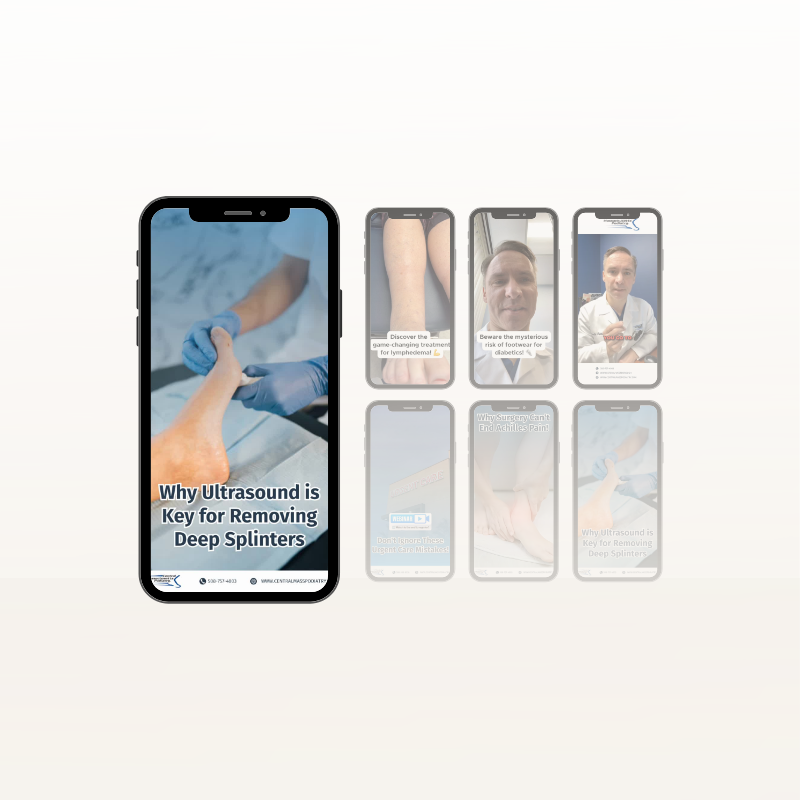
Engaging promotional videos and short-form content edited to increase reach and engagement.
HAVE A SIMILAR PROJECT?
Let's talk about it.