
Project 06 — 2026
— COURSE PROJECT
Two Framer builds, two different technical challenges
Whisk NYC & Owala — Overflow Education, Framer Academy 8-Week Founder Intensive
A note on what this is: both builds below are course projects, not client work. The brand concepts, copy, and testimonial content were provided by each assignment's brief — generated by the course's tool, Daniel. My work was the build itself: structure, CMS, motion, and layout, executed in Framer.
— THE CHALLENGE
Overflow Education's Framer Academy Founder Intensive includes timed build assignments: take a fully provided brief and execute it as a complete, working site. Two assignments tested different skills — Whisk NYC needed CMS-driven structure and e-commerce; Owala needed motion-heavy execution under a tighter deadline.
— WHAT I DID
I built both sites in Framer from their assigned briefs. Whisk NYC — a fictional Manhattan matcha café — used a CMS-driven product collection, video hero, and testimonial wall, completed in seven hours. Owala — a fictional, playful water bottle brand — used a text-reveal hero, scroll-triggered sections, hover interactions, and a testimonial carousel, completed in four hours.
Two briefs, two different technical demands — one testing structure and data, the other testing motion and pace. Executing both well shows the skill isn't tied to one kind of brief.
— WHISK MATCHA — CMS & STRUCTURE
Executing a data-driven brief under a fixed clock
With the brand, copy, and content already set, the work was entirely in translating that brief into a functioning, well-structured Framer build within seven hours.
Brief Review
Mapped the recurring hesitations coaches and course creators have about their own websites, drawn from real client conversations.Reviewed the assigned brand concept, copy, and product content before starting the build.
CMS Setup
Built a CMS collection for the four product variants, so each could be managed and displayed dynamically.
Hero & Motion
Implemented the video hero and scrolling marquee text as the site's opening sequence.
Testimonial Wall
Built the testimonial grid layout to hold the assigned customer quotes at scale.
E-Commerce Structure
Set up the shop, collection, and individual product page structure.
Navigation & Legal Pages
Built out full site navigation, including the legal and policy pages the brief called for.
Timed Completion
Completed the full build inside the course's seven-hour window.
Research
Reviewed drop-off points with the front-desk team.
Strategy
Reframed the flow around symptoms, not internal terms.
Architecture
Mapped a path with one decision visible at a time.
Wireframes
Tested the new flow before visual design.
Design
Applied the visual system throughout the experience.
Development
Built the experience inside the client's platform.
Automation
Connected reminders and follow-ups to reduce no-shows.
Launch
Delivered documentation and post-launch support.
— OWALA — MOTION & PAGE
A faster build, a heavier motion load
With less time than the Whisk assignment, the priority was sequencing the build efficiently — structure first, then layering in the motion the brief called for.
Brief Review
Reviewed the assigned brand concept, copy, and product content before starting the build.
Text-Reveal Hero
Built the animated text-reveal sequence that opens the site.
Scroll-Triggered Sections
Implemented scroll-based reveals for the "Perks" section, timed to the brief's energetic tone.
Hover Interactions
Built hover-triggered image swaps across the product feature sections.
Testimonial Carousel
Built the looping testimonial carousel to hold the assigned customer quotes.
Responsive Pass
Checked layout and motion behavior across breakpoints before finishing.
Timed Completion
Completed the full build inside the course's four-hour window.
— WHAT THIS DEMONSTRATES
Two briefs, executed on two different clocks
Neither project has client outcomes to report — both are completed course assignments, not engagements. Together, they show the ability to take a fully-provided brief and execute a complete, functioning Framer build — CMS collections, e-commerce structure, and heavy motion — across two different technical demands and two different time constraints.
— WHY THIS MATTERED
Agencies don't always hand off a blank page
A lot of agency work involves executing someone else's direction — a brief, an existing brand, content that's already written — rather than originating both strategy and build. Being able to move quickly and accurately from a provided brief to a finished site, whether that brief calls for structure or motion, is a distinct, directly useful skill for that kind of working relationship.
— GALLERY
A closer look at both builds
Two briefs, two technical directions, built on the same platform.
— SYSTEM ONE — WHISK NYC
Four product variants were built as a CMS collection rather than static pages, so each could be managed and updated independently.
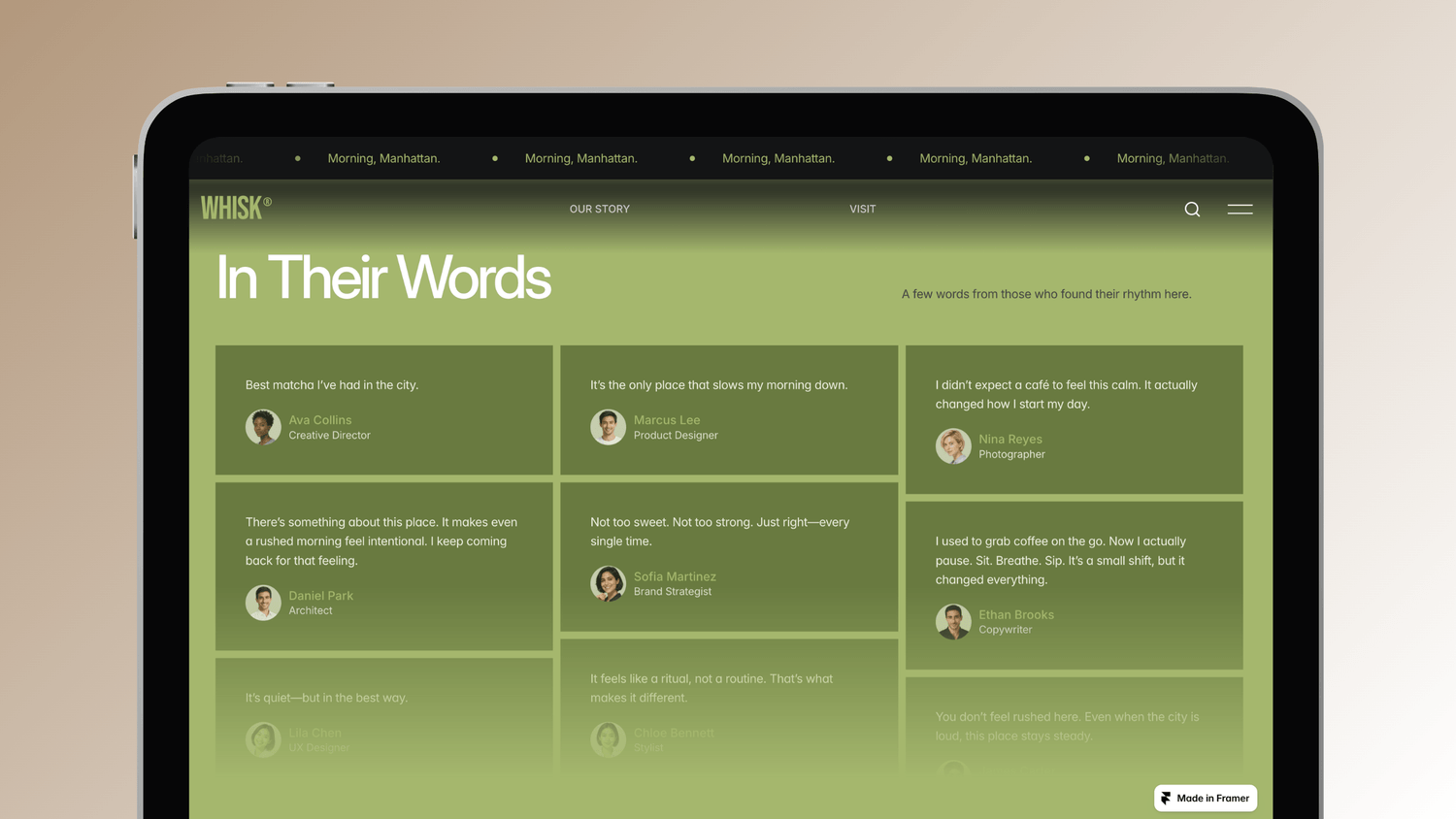
The testimonial wall was structured to hold the assigned set of customer quotes at scale, without the layout breaking down as content was added.
— SYSTEM TWO — OWALA
The hero uses an animated text reveal rather than a static headline, setting the brand's energetic tone before any other content loads.
The testimonial section was built as a looping carousel rather than a static grid, so it could hold the full set of assigned quotes without overwhelming the page.
— REFLECTION
What I'd carry into the next project
WHAT I LEARNED
Working from someone else's brief forces different priorities each time — Whisk required matching structure and data quickly, Owala required sequencing motion under a tighter clock.
WHY THESE DECISIONS
Most structural and motion choices across both builds were about executing each brief efficiently within its time limit, not exploring alternative directions.
IF I IMPROVED IT FURTHER
I'd want to revisit both outside their timed constraints, to see what I'd change with more time on each.
— MORE CASE STUDIES
Other projects worth a look.


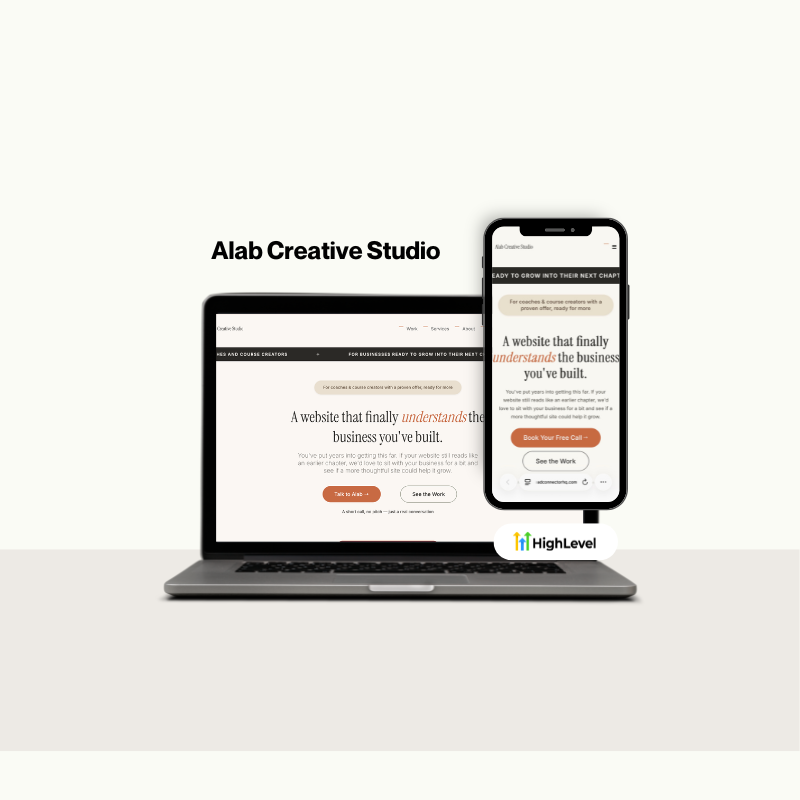
A premium agency website crafted to showcase services and generate qualified client inquiries.
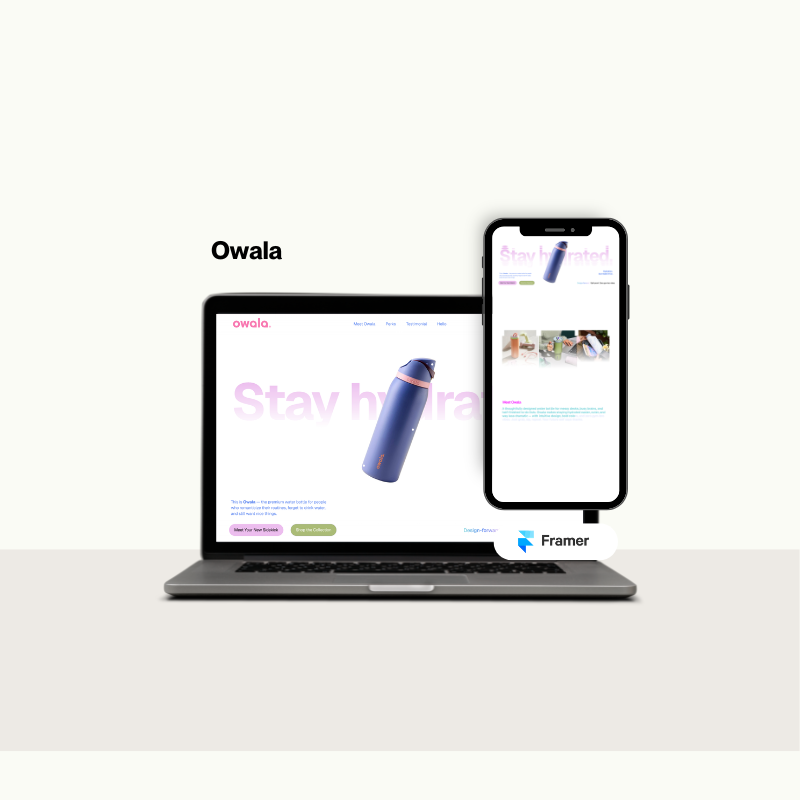
A modern product landing page concept built to highlight the Owala brand experience.
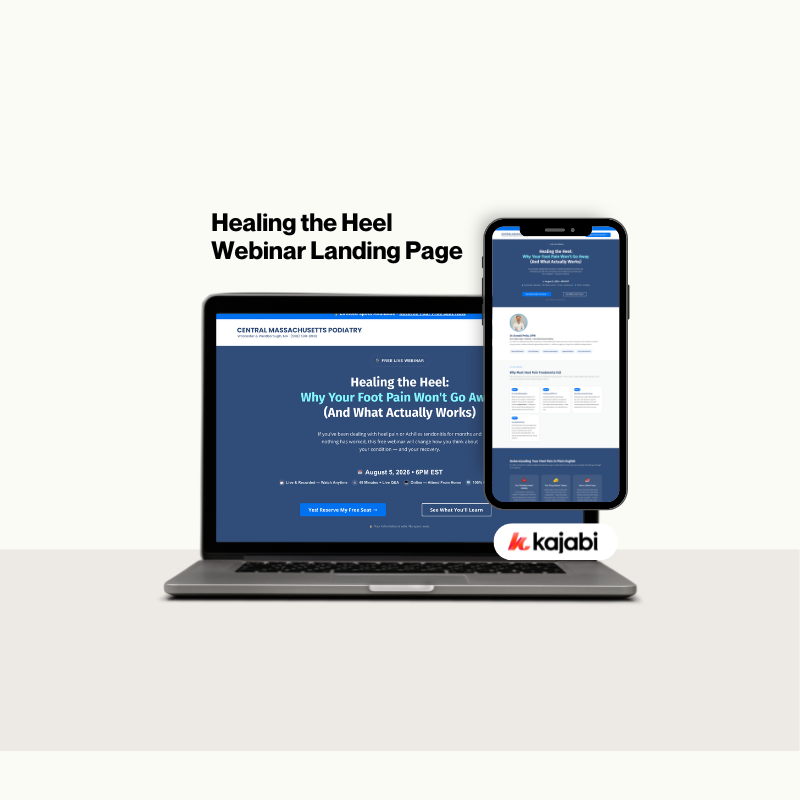
A webinar funnel designed to educate patients and increase appointment bookings.
HAVE A SIMILAR PROJECT?
Let's talk about it.